
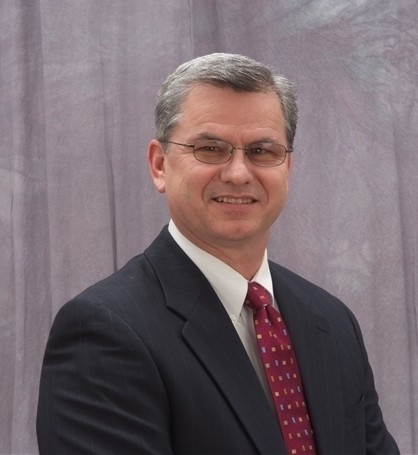
After more than three decades in the fertilizer and ag retail industry, ResponsibleAg Pioneer Billy Pirkle is retiring, but the organization he helped build isn’t going anywhere. Pirkle’s career included accomplishments at Novus Ag, IMC in Georgia, Royster-Clark in Illinois, and Nutrien Ag Solutions in Colorado. Along the way, he helped found ResponsibleAg, born out of the industry’s resolve to be ready before the next disaster, not after.
Agricultural businesses work hard to keep their employees, customers, and communities safe, and earning ResponsibleAg certification is how many demonstrate that commitment. The industry-led program verifies that member facilities comply with the environmental, health, safety, and security regulations governing how fertilizer, chemicals, and seed are stored and handled.
A Chemist Who Found His Cause in a Crisis
Pirkle is a chemist by training, though he laughs that he rarely uses the degree directly. But it opened doors: a seat on the National Fire Protection Association’s committee for ammonium nitrate storage standards, work that put him alongside chemists and regulators after fertilizer explosions in Toulouse, France, and Oklahoma City.
But it was the aftermath of the 2013 West, Texas, explosion that defined his legacy. Investigators found that ammonium nitrate had been stored in combustible wooden bins inside a wooden warehouse with no sprinkler system. Those were the kinds of safety gaps ResponsibleAg was built to close. Pirkle was in Washington for the roundtable discussions that followed, listening as regulators, manufacturers, and industry leaders debated what came next.
He says the group landed on the same concern: if the industry didn’t act, people without knowledge might step in and enact crippling regulations.
Pirkle credits Daren Coppock, president and CEO of the Agriculture Retailers Association, and the late Ford West, then president of The Fertilizer Institute, with pushing the industry toward action rather than waiting to be regulated. Pirkle had already done groundwork for this moment. After 9/11, he worked with a team —which included Allen Summers, co-founder of the Asmark Institute — to develop a security vulnerability assessment for ag retailers. But hiring outside consultants for $30,000 a site wasn’t realistic for an industry made up mostly of independents and regional players. That same instinct, that any solution had to work for the smallest mom-and-pop retailer as well as the largest national corporation, became a design principle behind ResponsibleAg.
“The risk is the same,” Pirkle says. “They all store fertilizer, chemical, and seed from the same manufacturers. We had to develop a solution that helps all ag retailers, big or little.”
When the room called for someone to lead the new effort, Pirkle didn’t exactly volunteer. It took some convincing..” Eventually, he agreed to serve as ResponsibleAg’s first chair.
The Business Case for Certification
When Pirkle makes the business case for ResponsibleAg certification, often to skeptical facility managers who worry an audit will expose what they don’t know, he starts with reframing the return on investment.
“Every decision a business person makes is a green decision,” he says. “If you don’t make decisions that are green, somebody’s going to be out of business.” His point isn’t cynical. It’s practical: certification pays for itself through better insurance conversations, stronger community standing, and a story to tell customers and neighbors alike.
He points to Willard Ag, a family-owned retailer now in its third generation, as a company that got this right. Willard Ag used its ResponsibleAg certification to help win community support for a new facility, turning a potential neighborhood objection into a point of pride. “Their employees know the story,” Pirkle says. “It’s not just the owner singing it.”
His closing advice to industry leaders is a single question, one he’s been asking for years and one he’ll keep asking in retirement: “Why not?”
“There will be another inflection point in the industry,” he says. “And when it occurs, we better be supporting this tool, because the next one might be even more invasive into how we have the freedom to operate our business.”
Retirement, On His Terms
In retirement, Pirkle plans to spend more time with his wife, three adult children, and grandchildren, get back to the guitar, chase a life master title in bridge, and keep working toward his level-two sommelier certification. He’ll also keep consulting a little, and keep looking, he says, for the next generation of industry leaders to mentor.
“Who’s your Timothy?” he likes to ask executives, a nod to the biblical Paul mentoring his disciple. “Who are you pushing to be in the next group of leaders?”